
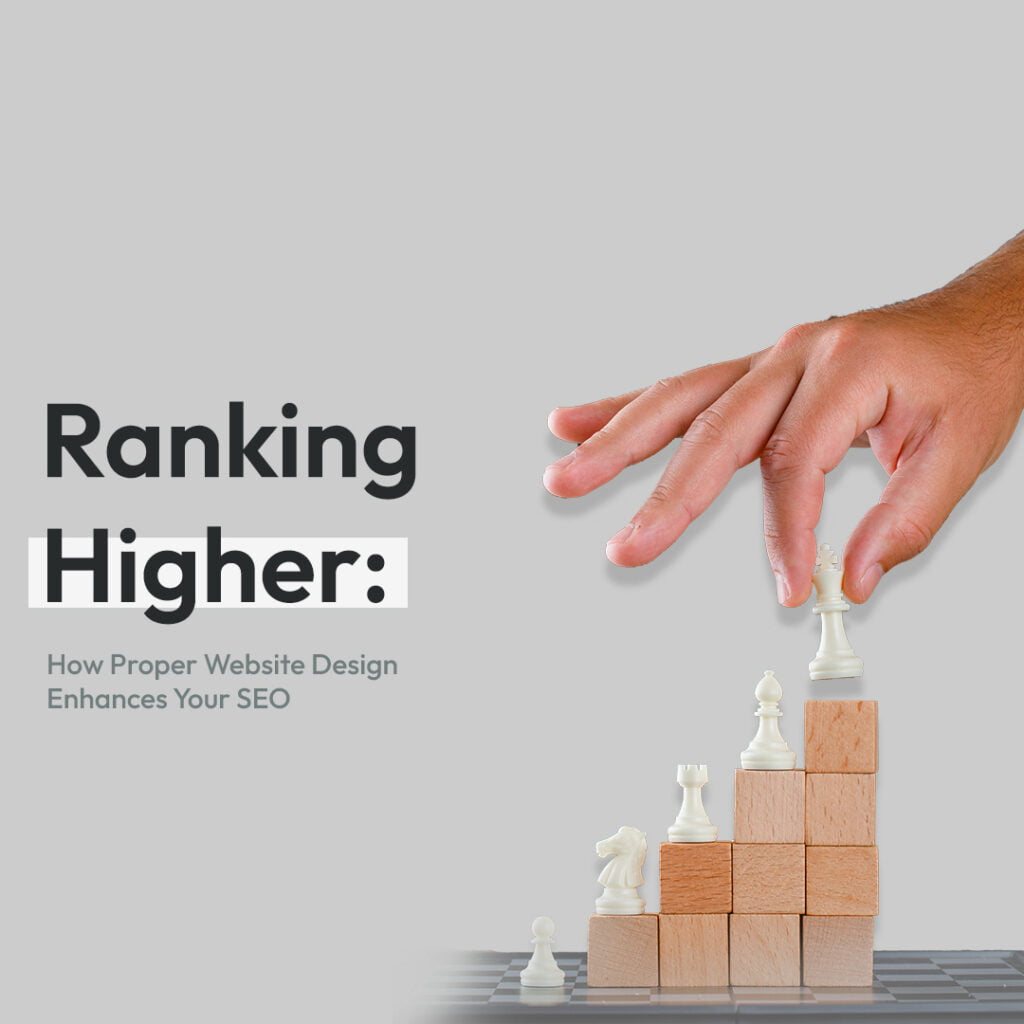
Ranking Higher: How Proper Website Design Enhances Your SEO
Ranking Higher: How Proper Website Design Enhances Your SEO Introduction Website design is a crucial component of digital marketing success, playing a vital role in search engine optimization (SEO). A well-designed website not only enhances user experience but also improves search engine rankings. In this blog post, we will discuss the best practices for website design and SEO, and the impact of user experience on SEO. Key Takeaways Website design directly impacts SEO – A well-designed website improves both user experience and search engine rankings, making design a critical component of digital marketing success. Mobile-friendliness is non-negotiable – With increasing mobile traffic, responsive design and mobile optimization are essential for maintaining strong search engine rankings. Loading speed matters – Fast-loading websites provide better user experiences and receive preferential treatment from search engines in rankings. User experience and SEO are interconnected – Good UX elements like clear navigation, quality content, and consistent branding directly contribute to improved SEO performance. Accessibility benefits everyone – An accessible website ensures that all users and search engines can properly access and understand your content, positively impacting rankings. Technical SEO elements are foundational – SEO-friendly URL structures, clear headings, and proper site organization help search engines crawl, index, and rank your content effectively. Key Elements of Website Design for SEO When it comes to website design and SEO, the important key elements include navigation and organization, responsive design, loading speed, mobile-friendliness, accessibility, search engine friendliness, SEO-friendly URL structure, and clear headings and descriptions. Navigation and Organization Navigation and organization should be clear and easy to use, making it easy for users and search engines to find the content they are looking for. A well-structured website helps both visitors and search engine crawlers navigate your site efficiently. Responsive Design and Mobile-Friendliness Responsive design is important because it ensures that the website looks great on all devices. Mobile-friendliness is also important because more and more users are browsing the internet on their mobile devices. If you’re looking for expert guidance on creating mobile-responsive websites that rank well, Digit Cure offers comprehensive digital marketing solutions tailored to your business needs. Loading Speed A website that loads quickly also improves user experience and helps with SEO. Slow loading times can frustrate users and negatively impact your search engine rankings. Accessibility Accessibility is important for both users and search engines, and it ensures that everyone can access your website. Search Engine Friendly Elements Search engine-friendly and SEO-friendly URL structure ensures that search engines can easily understand the content of your website. Clear headings and descriptions help search engines understand the content of your website and improve your search engine rankings. How Poor Website Design Impacts SEO A poorly designed website can negatively impact search engine rankings in several ways. Poor navigation can make it difficult for search engines to crawl and index the website’s content. Slow loading speed can cause search engines to lower the website’s ranking. Inadequate mobile-friendliness can also negatively impact search engine rankings, as more and more users are browsing the internet on mobile devices. A website that is not accessible can also negatively impact search engine rankings, as it makes it difficult for users and search engines to access the website’s content. The Impact of User Experience on SEO User experience (UX) plays a crucial role in SEO. A website with poor UX can hurt your SEO efforts, and a website with good UX can improve them. Good UX is about providing a positive experience for users. Elements That Improve User Experience Elements of website design that improve the user experience include: clear, easy-to-use navigation consistent design and branding high-quality images and videos content that is easy to read and understand good layout and typography. Partnering with a digital marketing agency like Digit Cure can help you implement these UX best practices effectively while optimizing your site for search engines. Contact Digit Cure for expert website design, SEO, and digital marketing solutions that drive results. Conclusion In conclusion, website design is a crucial component of digital marketing success, playing a vital role in search engine optimization. By implementing best practices for website design and SEO, you can improve your search engine rankings and provide a positive experience for users. Remember to focus on navigation and organization, responsive design, loading speed, mobile-friendliness, accessibility, search engine friendliness, SEO-friendly URL structure, and clear headings and descriptions, and don’t forget to consider the user experience when designing your website. By following these best practices, you can ensure that your website is optimized for both users and search engines and that it leads to digital marketing success. Frequently Asked Questions How does website design affect my SEO rankings? Website design impacts SEO through aspects such as the speed of the site, whether it is mobile-friendly, the navigation structure, and the user experience. Search engines prefer websites that are properly designed, easy for them to access, and offer good user experiences. What is the most important design element for SEO? Although all components support each other, the aspect of being mobile-friendly and the loading speed are two factors that are especially important because search engines give the highest ranking to mobile-first indexing and impose a penalty on slow-loading websites. Can poor navigation hurt my search engine rankings? Indeed, bad navigation confuses search engines in crawling and indexing your content properly, thus your rankings can drop considerably, and your site’s visibility will be decreased. How does user experience impact SEO? User experience is the main factor that influences SEO, as search engines consider user engagement metrics such as bounce rate, time on site, and click-through rates. If the UX is good, the website will rank higher. Do I need a responsive design for better SEO? Definitely, a responsive layout is a must-have for an SEO strategy to work because search engines implement mobile-first indexing. They utilize the mobile version of your site for both ranking and indexing. You might also like…. What is Apparel Marketing and Effective Strategies for Clothing Brands You might
Ranking Higher: How Proper Website Design Enhances Your SEO Read More »